Language

Usage recommendation
Contact lenses
Deposits, particles, and microorganisms from the eye itself or from external sources may accumulate. If they are not cleaned, they build up on the outer and inner surfaces of the lens, causing discomfort and reducing vision, with a high risk of infection.
Strictly follow the replacement schedule, the wearing period, the maintenance advice given to you, and do not use other products and/or solutions without consulting first.
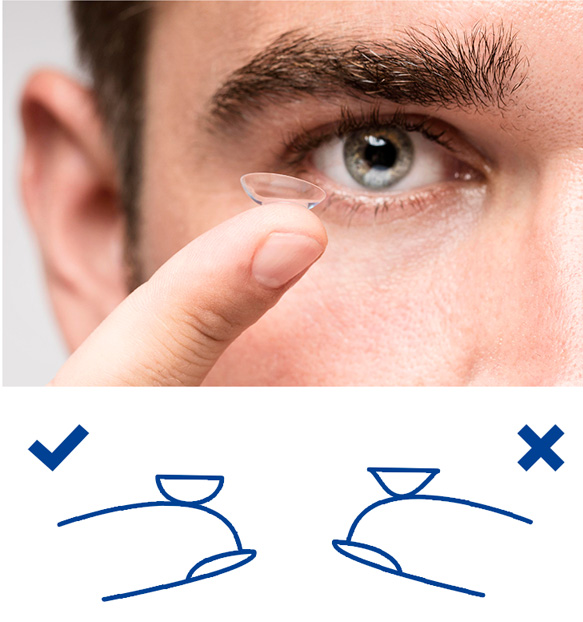
If you are right-handed, start with the right eye; if left-handed, with the left.
1 Place the lens on the tip of the index finger of your dominant hand, making sure it is dry.
2 With the middle finger of the same hand, pull down the lower eyelid.
3 Use the index finger of the other hand to lift the upper eyelid and look straight ahead or into a mirror.
4 Gently place the lens on the central or lower part of the eye and remove your index finger (the lens does not need to be perfectly centered).
5 Without releasing your eyelids yet, look down so the lens positions correctly; remove the remaining fingers and, while looking down, blink gently.
ATTENTION! Always make sure soft lenses are not inside out before putting them on.
1 Look slightly upward. With your middle finger, pull down the lower eyelid.
2 Use the tip of your index finger to move the lens to the lower part of the eye (white area).
3 Gently pinch the lens with your thumb and index finger and remove it without bending it excessively.

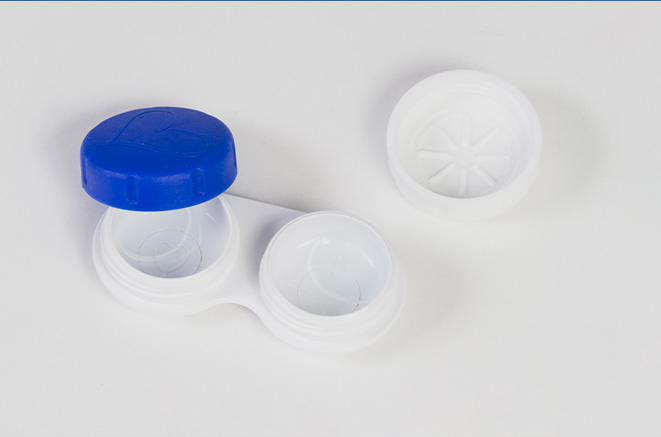
1, 2 and 3 Follow the same steps as for inserting soft lenses.
4 Gently place the lens on the colored part of the eye (iris) (it should be centered).
5 Slightly release both eyelids and blink gently.
1 Place your index finger at the outer junction point of the upper and lower eyelids.
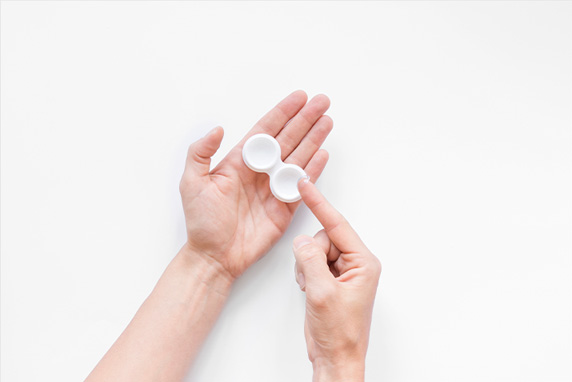
2 Keep your other hand open with the palm facing up under the same eye to catch the lens when it falls.
3 Stretch the skin outward and slightly upward, keeping the eye fully open.
4 Blink firmly and the lens will be expelled from the eye into the palm of your hand.

There is infection, inflammation, allergy, injury, pain, irritation, or any abnormality affecting the eye or eyelids.
You are using any medication that is contraindicated or may interfere with lens use, as it may alter eye metabolism (eye drops, antihistamines, antihypertensives, laxatives, hormones, sleeping pills, acne treatments, etc.).
You are in an environment where you are exposed to dust, harmful vapors, or irritants.
IMPORTANT
Contact lenses are hydrated, biocompatible materials with some elasticity but are very fragile and prone to tearing, scratching, and deterioration across their entire surface, even with great care.
Do not forget to consult your Optician-Optometrist if you notice any discomfort.
Things to do ✓
Before handling lenses, wash your hands and air dry them. If you use a towel, make sure it does not leave lint.
Handle lenses with your fingertips; avoid contact with nails.
Disinfect and rinse your lenses every time you remove them using recommended products. Close the bottles after use.
Empty the case completely and refill it daily to keep lenses clean and hydrated.
Handle lenses over a clean, dry surface. If near a sink, remember to cover the drain.
Put on contact lenses before applying eye makeup and remove them before removing makeup.
You can practice sports while wearing lenses, except boxing or other contact sports.
Strictly follow the wearing schedule and replacement period of your contact lenses.
Things not to do ✕
Never sleep with your lenses unless they are specifically designed for it and have been properly prescribed by your optometrist.
Do not handle both lenses at the same time to avoid mixing up right and left.