Pediatric and adult optometry
What is Optometry?
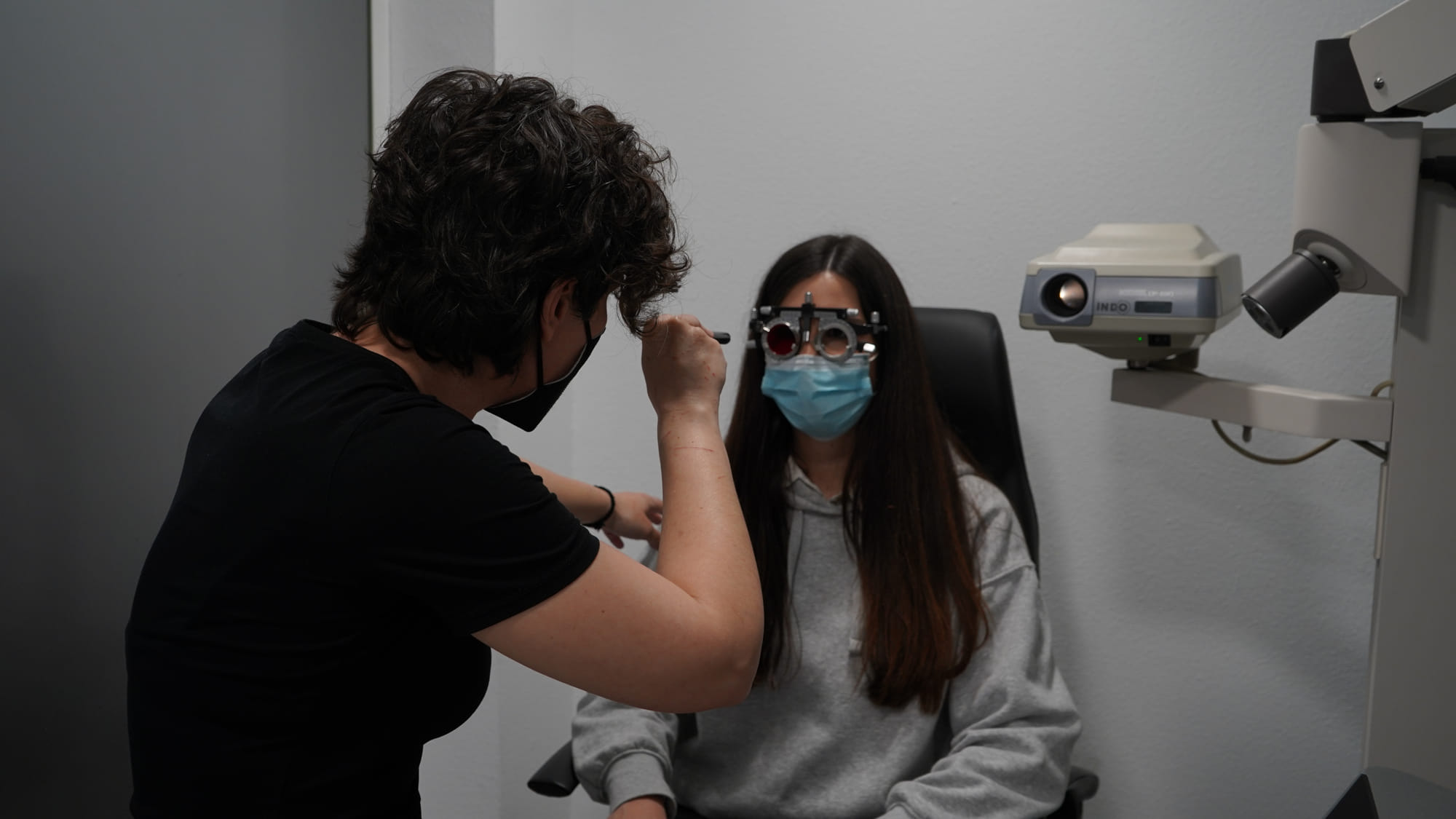
Optometry is the science responsible for assessing the efficiency of the visual system in both children and adults.
The optometrist can detect conditions such as lazy eye, strabismus, diplopia (double vision), focusing problems or issues with coordination between both eyes, as well as pathologies, ulcers, cataracts, retinopathy, AMD…
Do you often have headaches or eye strain after studying or reading? Do your eyes become red? Does your child sit very close when reading or using a tablet? Do they tilt their head or squint one eye when doing homework or watching TV?...
If you answered YES to any of these questions, you may have a visual problem.
Visual processing problems
What is visual processing?
It is the brain’s ability to recognize, interpret, discriminate, integrate, and understand the visual information that reaches us through the sense of sight.
Skills such as visual discrimination, visual memory, spatial relationships, and planning are some of the abilities that make up visual processing.
Visual discrimination helps us recognize letters, numbers, symbols, etc., and is very important for reading processes and for understanding what we are seeing.
Visual memory allows us to remember everything we have discriminated and identified, whether it is a single object or a sequence.
Visuospatial relationships help us orient ourselves, organize space, move around a room, or interpret a map, as well as distinguish between letters such as “p” and “b”.
But what if we can do all that but cannot organize the information? That is where planning comes in, allowing us to structure everything we have processed through vision.
If some of these skills are impaired, we may experience difficulties in areas such as reading, writing, and concept acquisition, among others.
What can we notice when there is poor visual processing?
If any of these skills are affected, we may experience difficulties with reading and writing, confuse letters, have trouble memorizing study material, or interpreting math problems. We may also struggle to understand what is being asked in an exam if the way questions are phrased or the content differs from how it was studied.
How do we detect it?
To detect whether there is a visual processing problem, a series of specific tests must be carried out to assess how visual information is interpreted, understood, and organized.
How can these skills be improved?
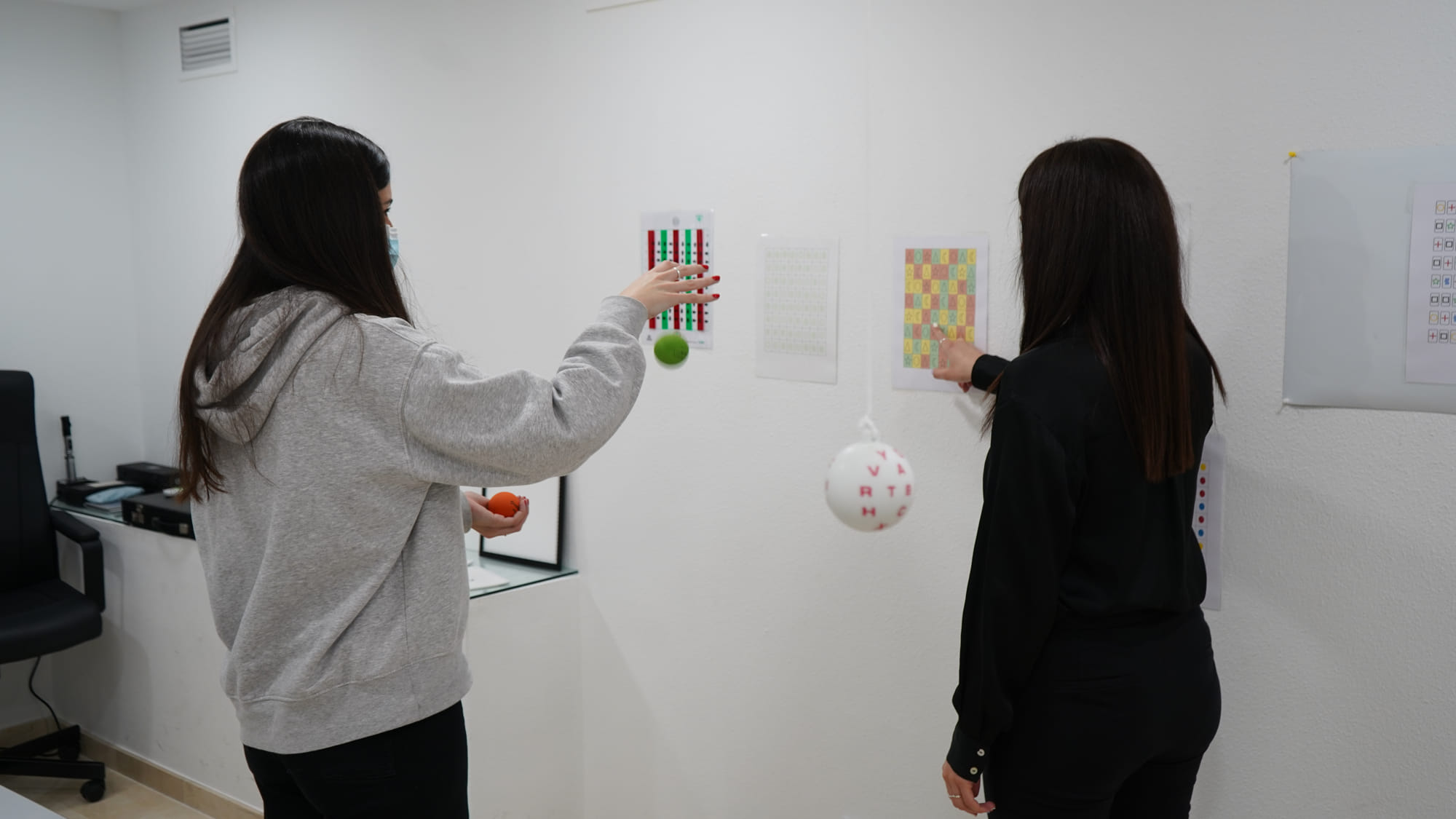
To improve and enhance visual skills, it is necessary to undergo visual therapy, using specific exercises and procedures that help develop or integrate these abilities.
"We can learn, restructure, improve, and ultimately automate the ability to see in order to achieve maximum visual performance with the least possible energy expenditure."
Visual therapy
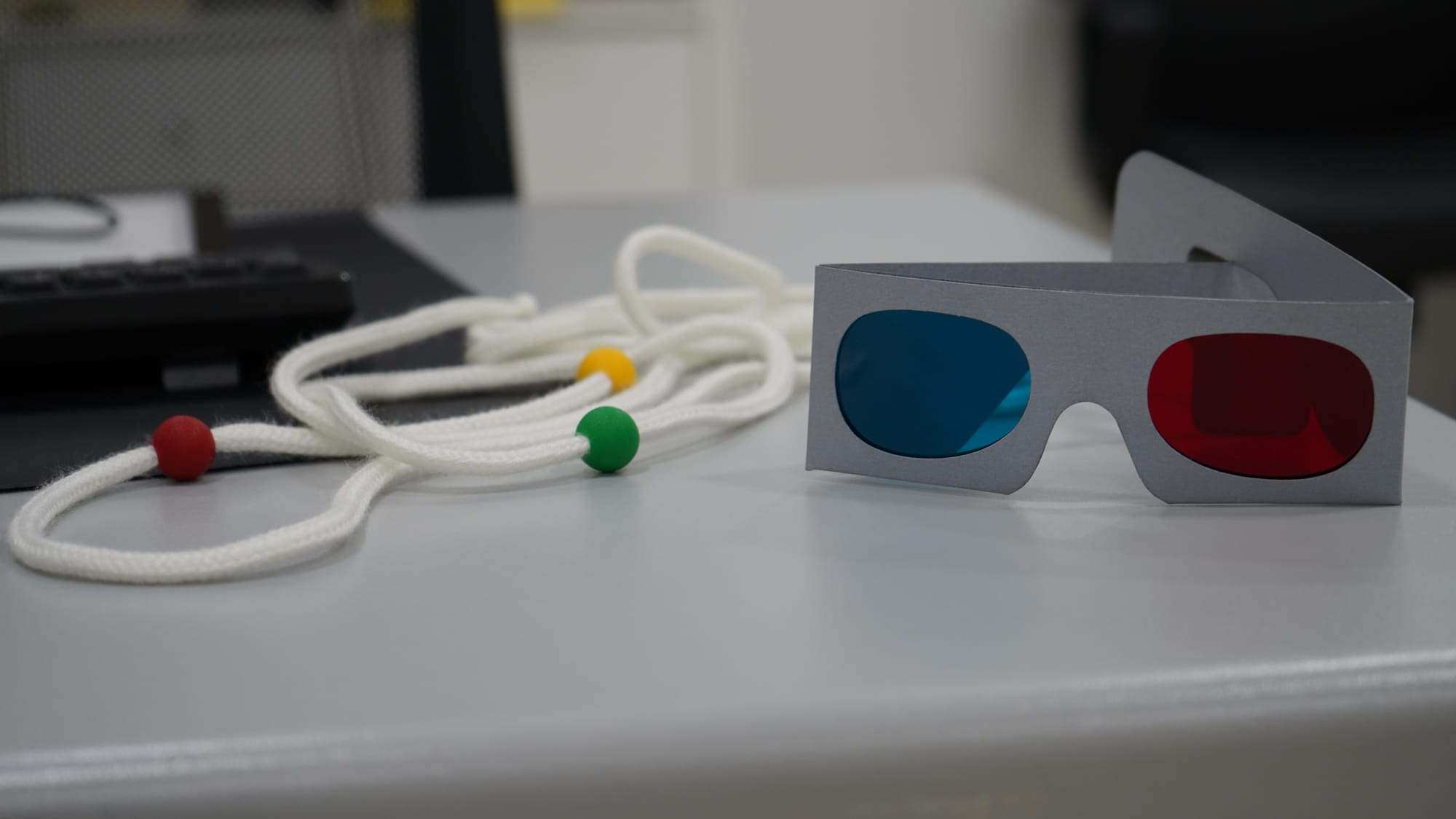
It is a personalized treatment based on visual exercises and sensory-motor perceptual stimulation procedures, aimed at developing, enhancing, and/or improving the visual skills in which the patient shows below-normal performance.
What types of difficulties can be improved with visual therapy?
- Visual therapy has been proven effective in both children and adults.
-
Among these conditions we find:
- Amblyopia (lazy eye).
- Coordination and/or focusing problems.
- Strabismus.
- Double vision.
- Visual processing problems.
- Oculomotor problems (eye movements).
How is visual therapy carried out?
At Soloptical Larios, we develop a series of personalized exercises for each patient, based on the diagnosis obtained.
We carry out one weekly in-clinic session and reinforce the therapy with daily exercises at home. These exercises are explained beforehand to the patient (they will not exceed 15 minutes per day) and are designed to be dynamic and engaging.
Duration of the treatment?
It will depend on which values are reduced in the initial visual assessment.
Effectiveness
For visual therapy to be effective, the most important factors are having an accurate diagnosis and ensuring the patient is well motivated to carry out the treatment. When this is achieved, it becomes the key to success, as both the professional and the patient will be working together toward the same goal.
Myopia control
Nowadays, partly due to prolonged use of new technologies, we are seeing a progressive increase in myopia. Myopia affects 6 out of 10 people in Spain.
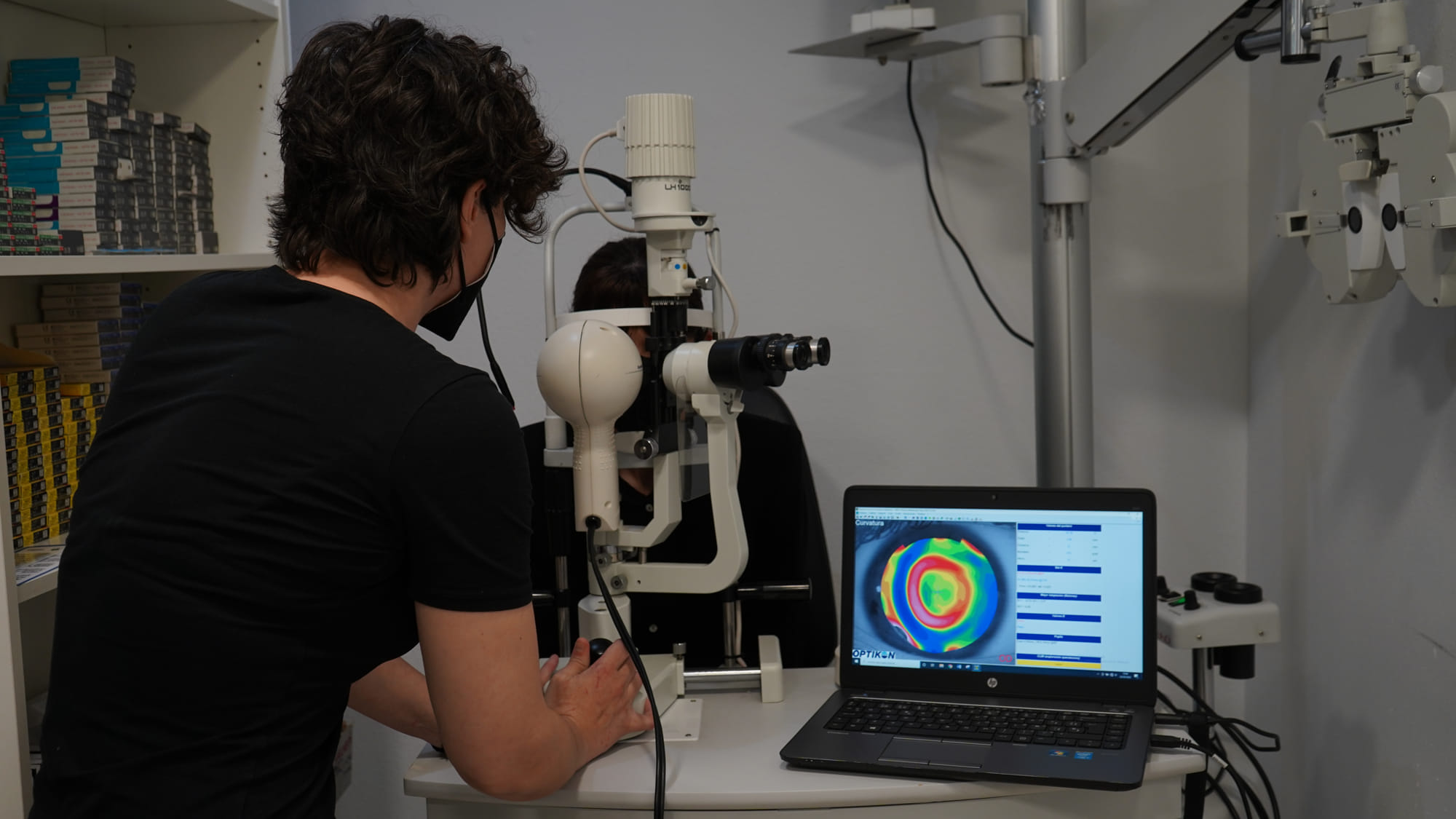
Preventing the progression of myopia is a key role of the Optician-Optometrist. We have a range of specific diagnostic tests to provide the best recommendations for treatment and follow-up of our patients.
Soloptical offers the most advanced and up-to-date treatments:
-Ortho-K
-MiSight
-Myosmart
-Pottencia
Slowing the progression of myopia is important, as it can lead to long-term problems, including retinal diseases and reduced visual acuity.